As businesses increasingly highlight their environmental and social commitments, regulators are paying closer attention to whether those claims hold up. For mission-driven companies, understanding the FTC’s approach to greenwashing matters both as a compliance question and as a question of credibility.
What Is Greenwashing, and Why Does the FTC Care?
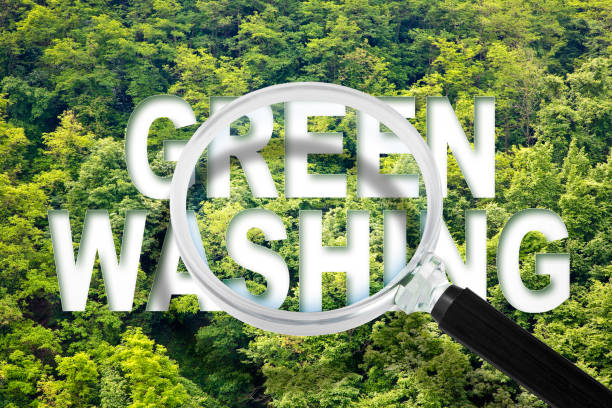
Greenwashing — the practice of making misleading, overstated, or unsupported claims about a company’s environmental practices — has become a growing focus of regulatory scrutiny. The FTC addresses these claims under Section 5 of the FTC Act, which prohibits unfair or deceptive acts or practices in commerce.
The FTC’s primary tool for this work is its Guides for the Use of Environmental Marketing Claims, commonly known as the Green Guides. First published in 1992, the Green Guides set forth how truth-in-advertising principles apply to environmental marketing claims. Although they do not carry the force of binding regulations, they represent the FTC’s current view of what types of claims it may find deceptive and directly inform enforcement decisions. The Green Guides also influence state laws and enforcement actions, as many states have incorporated them into their consumer protection frameworks.
Enforcement Trends and Recent Cases
The enforcement landscape is shifting rapidly: greenwashing lawsuits, once niche and episodic, have become multifaceted and are spreading across industries at an accelerating pace, with an increasingly broad range of plaintiffs bringing more sophisticated allegations. At the state level, California, New York, Connecticut, and Massachusetts are increasingly leading legal challenges against companies making misleading environmental claims.
Recent cases illustrate the range of exposure companies face. In late 2025, Tyson Foods settled a lawsuit brought by the Environmental Working Group over “climate smart” beef marketing, agreeing to a five-year ban on similar claims, with any future environmental claims required to be backed by expert analysis and verified facts. On the securities side, the Securities and Exchange Commission (SEC) fined Keurig Dr Pepper $1.5 million in 2024 for inaccurate recyclability claims made in its annual reports. This case demonstrated how environmental statements made in SEC filings can give rise to securities liability, independent of any consumer protection claim.
Key Requirements Under the Green Guides
The Green Guides address a wide range of environmental claims. Some key principles particularly relevant to mission-driven companies include:
- Vague claims carry the highest risk. Broad terms like “green,” “eco-friendly,” or “sustainable” used without qualification or substantiation are precisely what regulators scrutinize most closely. Such claims must be backed by clear evidence and specifics.
- Degradable and compostable claims require concrete proof. For unqualified degradable claims, the FTC requires proof that the entire item will break down within a year of customary disposal. Products that end up in landfills, incinerators, or most recycling facilities typically do not meet this standard. Note that the Green Guides have been under revision since 2022, with finalization still pending as of publication, and this standard may be updated. Companies should monitor developments closely.
- Carbon offset and carbon neutrality claims face heightened scrutiny. Courts and regulators continue to examine how consumers interpret phrases like “carbon neutral,” and companies using them without specifying the basis for the claim face meaningful legal risk.
- Third-party certifications must be clearly disclosed. Seals and certifications can be genuinely valuable, but only if consumers can understand what the certification covers and who issued it.
Considerations for Mission-Driven Companies
Companies that genuinely invest in sustainability and social impact can face greenwashing exposure precisely because they communicate those commitments publicly and often. Good intentions do not insulate a company from liability when the claims made in marketing materials, on product packaging, or in investor communications go beyond what the underlying facts support.
This is particularly relevant for B Corps and benefit corporations, which frequently cite their environmental and social performance as a core part of their identity. Being a certified B Corp or a public benefit corporation provides a strong foundation, but it does not mean that every environmental claim made in marketing or on product packaging is automatically substantiated. Each claim still needs to be accurate, specific, and supportable independently. A useful starting point for B Corps conducting a claims audit is reviewing the specific environmental metrics covered by the B Corp Impact Assessment — which reflects the scope of certified performance, not a blanket endorsement of all environmental marketing.
Compliance Recommendations
Mission-driven businesses should consider taking the following steps:
- Audit your environmental claims. Review marketing materials, website content, packaging, and investor communications carefully. Any claim that cannot be supported by reliable, documented evidence is a potential liability.
- Be specific. Replace vague language with precise, qualified statements — “made with 40% recycled content” is far safer than “eco-friendly packaging.”
- Document your substantiation. Maintain records supporting each environmental claim, including data sources, testing results, and third-party certifications.
- Monitor state law developments. California and other states are setting standards that may apply to your business regardless of where you are headquartered.
- Involve legal counsel early. Environmental marketing claims are much easier to get right before publication than to defend after a complaint has been filed.
The regulatory environment around environmental marketing is evolving, and the consequences of getting it wrong — from enforcement actions to reputational harm — are real. Companies that take compliance seriously now are better positioned to communicate their commitments with confidence. If you have questions about your environmental marketing claims or want guidance on your current practices, ImpactGC is here to help.