
Reaching financial close for a federal credit deal is no small feat, and frequently it falls to the legal teams to ensure that the business deal not only complies with the various federal requirements but is not hampered by any of those requirements. After several years working as a deal attorney at three different federal agencies, I have seen a few pitfalls in the deal papering process arise repeatedly – often leading to amendments (or even restructurings) post-closing.
Whether you are an attorney supporting one of the many federal credit programs (or advising their borrowers or investees) or an impact fund manager or mission-driven organization layering federal debt into a blended finance deal, these four potential pitfalls should be on your radar.
The Pitfall: Failing to account for the social and environmental (S&E) review and compliance process when developing a project timeline.
Context: U.S.-based projects that are financed by a federal agency are subject to the National Environmental Policy Act. Similarly, non-U.S. based projects that are financed by a federal agency are subject to that agency’s S&E review process. In either case, for a greenfield project, this review can easily take months (or much longer), and the review must be completed prior to any disbursement of federal funds. In addition, oftentimes, the outcome of these reviews results in additional covenants being placed on the recipient which may also need to be completed prior to (full) disbursement of the federal credit.
Why It Matters: Delay in completion of the S&E review (or in completion of any additional requirements that result from the review) could lead to unanticipated delays in receiving the federal funding, which in turn may adversely impact the project’s overall schedule and budget.
How to Address:
The Pitfall: Including aspirational ESG and impact covenants as hard-coded covenants in the credit documents.
Context: Inclusion of covenants that require specific social, environmental, or development outcomes in the credit agreements for federal agencies (as well as DFIs, multilaterals, and impact funds) is market standard at this point. At times though, these agreements include both required covenants and aspirational goals as inflexible covenants, with the same outcomes (e.g., default) if they are not achieved.
Why It Matters: Inclusion of aspirational goals as locked covenants in the credit agreement can put the federal credit recipient on a path to technical default if they are unable to comply with the covenant – setting all parties up later for the process of either waiving a default or amending a document (and the awkward conversations that are required to explain the rationale for why it is needed).
How to Address:
The Pitfall: Failing to appreciate the complexities that accompany obtaining federal credit.
Context: Federal credit programs are not conventional loans that happen to have a government lender. These programs are authorized by statute (for some, this authorization must be renewed from time-to-time), implemented through agency regulations, funded (oftentimes, annually) through the budget and appropriation process (which can layer on additional program terms and conditions), and then directed (in terms of funding priority) by each presidential administration. These layers of governmental influence impact many aspects of the transaction (e.g., eligibility requirements, disbursement conditions, covenants, reporting requirements, collateral requirements, etc.).
Why It Matters: Given the complexities and intricacies of navigating federal credit programs, teams and advisors that lack experience with these programs often end up approaching the transaction as they would a private credit transaction – leading to protracted negotiations and ultimately increased time and expense in getting to financial close.
How to Address:
The Pitfall: Simply adding each credit provider’s reporting requirements into the credit documentation without analysis.
Context: Federal credit programs, as well as impact funds, private banks, and other credit providers each have a unique (and often, partially overlapping) set of reporting requirements, including reporting on finances, impact metrics, material issues, and project development and operation. For federal credit programs, some reporting requirements are statutory in origin and (fairly) non-negotiable in scope. Also, recipients of federal funding may be indirectly impacted by federal disclosure requirements that fall on the relevant agency, e.g., reporting to Congress, Freedom of Information Act (FOIA) requests.
Why It Matters: Satisfying reporting requirements from multiple parties can be burdensome, and reporting requirements that partially overlap can lead to inefficient use of time and resources. Additionally, it is possible that federal reporting or disclosure requirements may conflict with the confidentiality requirements of the recipient’s other investors.
How to Address:
Federal credit is a powerful, low-cost, and patient tool for financing impactful projects. However, these benefits come with statutory, regulatory and policy complexities. Attorneys and fund managers who understand the nuances of navigating federal credit intricacies will be able to spend less time unwinding problems that could have been avoided and more time doing the important of creating lasting impact in the communities and markets that need it most.
This article is intended to provide general information about obtaining federal credit and does not constitute legal advice. We encourage you to consult with an attorney for advice based on your specific circumstances. This article does not create an attorney-client relationship between ImpactGC and you or your company, or create any duties to provide advice with respect to obtaining federal credit. ImpactGC is not responsible for updating you or your company about developments regarding obtaining federal credit.
At ImpactGC, we stand at the intersection of legal expertise and purpose-driven business. We specialize in providing fractional general counsel services and transactional counsel services to impact investors (and their portfolio companies), B corporations, and other mission-driven enterprises – all at rates that are a fraction of the cost of hiring a full-time in-house counsel or engaging a traditional law firm.
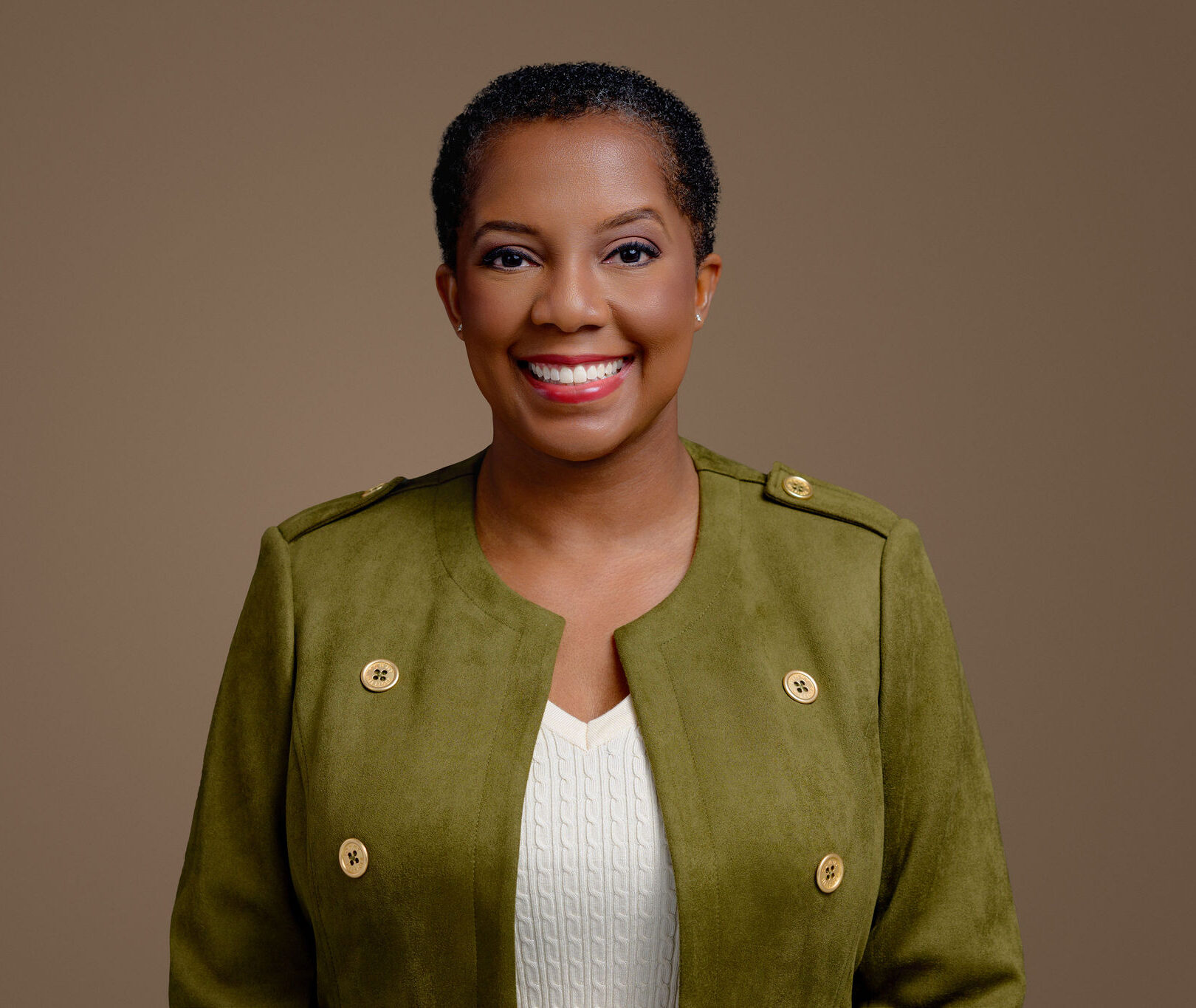
Cortney has over 18 years of experience across an international law firm, corporate legal departments, a start-up, three federal credit programs, and an impact fund. Cortney advises impact investors on portfolio debt investment transactions, governance, and general corporate matters, and serves as transaction and external general counsel for mission-driven small and medium-sized organizations.

Cortney has over 18 years of experience across an international law firm, corporate legal departments, a start-up, three federal credit programs, and an impact fund. Cortney advises impact investors on portfolio debt investment transactions, governance, and general corporate matters, and serves as transaction and external general counsel for mission-driven small and medium-sized organizations.




J.D., magna cum laude, University of Maryland Francis King Carey School of Law
Fractional / interim general counsel / chief legal officer | Complex commercial contracts | Compliance Oversight| Corporate formation and governance | Cross-border M&A | Data privacy | Employment Matters | E-commerce | Executive Compensation & Transitions | Intellectual property licensing | Legal Department Buildout & Optimization | Private equity | Regulatory compliance | Technology start-ups | Venture capital
Maryland
Heather Pruger is an experienced corporate and transactional attorney with extensive experience helping high-growth, technology-driven businesses navigate growth, complexity, and change. She works closely with founders, executives, boards, and in-house teams through acquisitions, investments, legal function buildout, and leadership transitions.
Heather is particularly energized by working with mission-driven and women-led companies and leadership teams that care deeply about building durable, values-aligned businesses. She brings a calm, collaborative style and practical, business-oriented approach – drawing on both major law firm training and hands-on in-house leadership experience – to bring clarity to complex issues, create scalable legal and operational solutions, and help businesses move forward with confidence. Her early experience as a litigator continues to inform her corporate work today, particularly in assessing risk, navigating conflict, and helping clients make sound decisions under pressure.
Before joining ImpactGC, Heather served as General Counsel of a multinational operating group of a major publicly traded software company, where she built and scaled legal and privacy functions to support a global portfolio of software businesses during an extended period of acquisitive and organic growth. Her experience also includes founding her own legal and advisory practice providing fractional general counsel services and leading M&A transactions, and practicing at major U.S. law firms advising emerging, middle-market, and public companies. Her practice has long had a multinational dimension spanning cross-border M&A, strategic transactions, governance, commercial contracting, privacy, compliance, employment matters, enterprise risk, and dispute management.
When she is not advising clients, Heather can often be found on the trails — running, hiking, or simply being in the woods — or competing in triathlons; she is a two-time Ironman finisher. She is based in Ellicott City, Maryland, where she enjoys gardening, yoga, and exploring nature with her dog, Maggie.
Key Experience:
Memberships/Activities:

Duke University School of Law
Impact investment funds | Portfolio debt financing | Project finance | Corporate finance | Mission-driven SMEs | Outsourced general counsel | Corporate governance | Commercial contracts | Debt restructuring | B Corporations and benefit corporations | Clean energy and infrastructure financing
New York, District of Columbia
Cortney brings extensive experience in impact-oriented debt financing to ImpactGC, having spent over a decade structuring complex transactions that deploy capital to create both financial returns and measurable social and environmental impact.
Most recently, Cortney served as Associate General Counsel at Calvert Impact’s Climate United Fund, where she was lead legal counsel on debt financings for clean energy projects. She also handled general corporate matters, including corporate governance, board liaison work, and compliance issues.
Before that, Cortney spent over seven years at federal agencies—including the U.S. International Development Finance Corporation, the Environmental Protection Agency WIFIA Program, and the Department of Transportation Build America Bureau—structuring and negotiating billions of dollars in financing transactions for international development (in sectors ranging from agriculture to microfinance), water infrastructure, and transportation infrastructure.
At ImpactGC, Cortney advises impact investment funds on portfolio debt investment transactions, governance, and general corporate matters; she also serves as transaction counsel for companies seeking financing from impact-oriented investors and federal agencies. Cortney also represents mission-driven small and medium-sized enterprises. This practice draws directly on her prior experience as the General Counsel of a behavioral health startup. In that role, Cortney handled all of the legal needs for a growing mission-driven company, including drafting and negotiating joint venture agreements, investor documentation, commercial leases, vendor agreements, and employment agreements; advising senior management on personnel matters, corporate governance, and day-to-day operational issues; and collaborating across departments to solve business problems that happened to have legal dimensions.
Cortney is passionate about working with organizations that view business as a force for good. Having spent her career helping deploy capital to support clean energy, water infrastructure, international development, and other mission-critical sectors, she understands that companies and investors committed to creating positive social and environmental outcomes deserve legal counsel who truly understands their mission—not just their business model.
Cortney is based in the Washington D.C. area where she enjoys traveling, playing tennis, and spending time with her family.
Key Experience:
Associate General Counsel, Climate United Fund, Calvert Impact, Inc.
Assistant General Counsel, U.S. International Development Finance Corporation
Senior Attorney Advisor, WIFIA Management Division, U.S. Environmental Protection Agency
Attorney Advisor, Build America Bureau, Federal Highway Administration
General Counsel, Cornerstone Project
Associate, Clifford Chance US LLP
Awards & Recognition:
2023 Innovation Award, U.S. International Development Finance Corporation
2020 Office of Water Bronze Medal Award (co-recipient), U.S. Environmental Protection Agency

J.D., New York Law School
B.A., Women’s Studies, University of Connecticut
Outsourced General Counsel | NDA Negotiation | Vendor & Consulting Agreements | Employment Contracts | Separation Agreements | Dispute Resolution | Contract Drafting & Negotiation | Compliance Oversight | Access, Reliance & Engagement Letters
New York, New Jersey, Florida, California
Jamie brings over 19 years of legal experience to her role as Of Counsel at ImpactGC. As the founder of JL Principe Legal PLLC, she utilizes her diverse experience to provide outsourced general counsel services to entrepreneurs and businesses, with a particular focus on supporting women and women-owned businesses.
Throughout her distinguished career as an in-house attorney across various industries, Jamie has consistently demonstrated her commitment to making a meaningful difference in people’s lives through her legal and business acumen. She is known for her collaborative approach, working closely with clients to educate and empower them to navigate complex legal challenges with confidence and clarity.
What sets Jamie apart is her ability to diffuse tension in challenging legal situations through her refined sense of humor, fostering camaraderie and productive relationships with clients and colleagues alike. She firmly believes that effective legal counsel goes beyond technical expertise to include genuine human connection.
When not advocating for her clients, Jamie can be found singing karaoke, taking dance lessons, or enjoying the company of her dog Joey.
Jamie’s addition to the ImpactGC team reinforces our commitment to providing exceptional legal guidance through professionals who combine deep knowledge with a genuine passion for client advocacy and empowerment.
Key Experience:
Founder, JL Principe Legal PLLC
Deputy Chief Compliance Officer & CISO, Levine Leichtman Capital Partners, LLC
Regulation Compliance Manager, Rogerson Kratos
Of Counsel, NuEra Law Group, Inc.
General Counsel, Spiritus Life, Inc.
Memberships/Activities:

J.D., The Catholic University of America, Columbus School of Law
Outsourced General Counsel
Complex commercial contracts
Corporate formation and governance
Commercial and Captive Insurance
Employment matters
Separation and Consulting agreements
New York, District of Columbia
Maura brings over twenty years of experience in corporate law to Impact GC, including a thriving practice acting as outside general counsel to commercial and non-profit clients across industries. Navigating multiple client legal issues simultaneously, Maura provides reliable, responsive, and reasonable support. Maura is recognized for her ability to dissect complex legal and factual issues and collaborate with clients to develop effective solutions, particularly in the areas of employment, insurance, contract negotiation, and corporate formation and governance.
Maura has significant experience working with boards of directors and executives on corporate governance, operations, and strategic planning, and guiding companies through complex M&A transactions, liquidation and dissolution procedures, and C-suite succession planning.
Maura’s work with non-profit organizations, from formation to tax-exempt qualification and helping them meet their operational goals and compliance requirements, has proven particularly rewarding. She looks forward to deeper involvement representing non-profit purpose-driven organizations at Impact GC.
Maura sits on the Board of Directors of a Bermuda-based commercial and captive insurance services group. She is also a director and secretary of a nonprofit charitable youth sporting organization, and a long-time volunteer in her children’s school and parish community, where she was a member of the Strategic Planning Committee of the School Advisory Board for five years.
Maura is based in the Washington, D.C. area, where she enjoys cooking, reading, attending her children’s many sporting events, and spending time hiking with her family and yellow Lab, Archie.
Key Experience:

J.D., University of Virginia School of Law
TBC
New York, District of Columbia
Jim is a highly experienced corporate lawyer with more than two decades of legal experience, including as a partner in a leading global law firm and most recently as Chief Legal and Compliance Officer and Member of the Executive Leadership Team of a publicly traded international company.
Jim’s career has shown him the importance of working with a clear focus on ethical and sustainable business practices, which led him to co-found ImpactGC to further his personal mission of helping make business a force for good. Jim is fully committed to operating with a triple-bottom-line approach (People, Planet, Profit) and to helping mission-driven clients of all types pursue their important social, environmental and governance aims.
Jim has extensive experience counseling founders and executive teams on corporate strategy, major transactions and other important matters, including litigation management, corporate governance and compliance. He has advised on numerous complex commercial contracts across a range of industries, as well as mergers and acquisitions and corporate finance deals. His commitment to social justice and human rights is reflected in a long track record of pro bono and other volunteer work, including advising a prominent LGBTQ civil rights organization, the Innocence Project and the American Academy in Berlin, among others.
Jim spent well over a decade working and studying overseas, including in Germany and the Czech Republic, and he speaks fluent German. He is a frequent author and speaker on a wide range of business law topics, including those of particular relevance to mission-driven companies. He is based in the Washington D.C. area, where he loves to spend time hiking, biking and running the trails and communing with nature in the woods of Northern Virginia. In his personal time, he is a devoted father of two, partner and dog dad of a highly opinionated Shiba Inu.
Key Experience:
Select Speaking Engagements and Publications:
Memberships/Activities:

J.D., cum laude, Georgetown Law
Complex commercial contracts | Cross-border M&A | Venture capital | Private equity | Corporate governance | Impact investing | Sustainability | Renewable energy/climate tech | Regulatory compliance |Employment matters | Technology start-ups | Partnerships | Secured transactions | Data privacy | Entity formation and structuring | E-commerce | Intellectual property licensing
New York, District of Columbia, California
Julie is an accomplished global corporate and securities lawyer with over 25 years’ legal and entrepreneurial experience. She is recognized for her unique problem-solving, collaborative approach, and enjoys working with clients to understand their specific business concerns and creating tailored, practical legal solutions.
Starting her career at the law firms of Clifford Chance LLP and Akin Gump LLP, Julie developed broad expertise representing major clients in a range of complex cross-border transactions. She also has significant experience working with entrepreneurs and small- to mid-cap companies. She is the co-founder of AltaClaro, an innovative experiential online learning platform, and has represented numerous successful tech start-ups in all stages of growth.
Most recently, Julie served in an in-house counsel role as Chief Regulatory Officer and Deputy General Counsel at Northern Data, a German public company, where she spearheaded the company’s U.S. restructuring and successfully negotiated several high-stakes commercial transactions.
Julie is passionate about supporting women and minority-owned businesses and working with purpose-driven clients, believing that every business, large or small, deserves high quality, practical legal support from a lawyer who understands their business goals and concerns. She also enjoys being involved with the community. She currently is an adjunct professor at Georgetown Law, volunteers with several non-profit organizations and accelerators, has published a textbook as well as numerous articles, blogs, and presentations, and served on the corporations committee for the State Bar of California for over 8 years.
Julie spent several years working overseas, including Bogotá, Colombia, and Montreux, Switzerland, and speaks fluent French and Spanish. She is based in the Washington D.C. area where she loves to spend time with her family on the Potomac River paddling and sailing.
Key Experience:
Select Speaking Engagements and Publications:
Memberships/Activities:

